


Coach David Ertl gives us the dirt on gravel riding, and how to incorporate it into your training for RAGBARI LII.
Get into Gravel
Rumor has it that there will be multiple options to ride gravel as part of this year’s RAGBRAI. Note the word ‘optional’. The main course (yum) will be on pavement but there will be alternate segments on gravel that you can ride if you so choose.
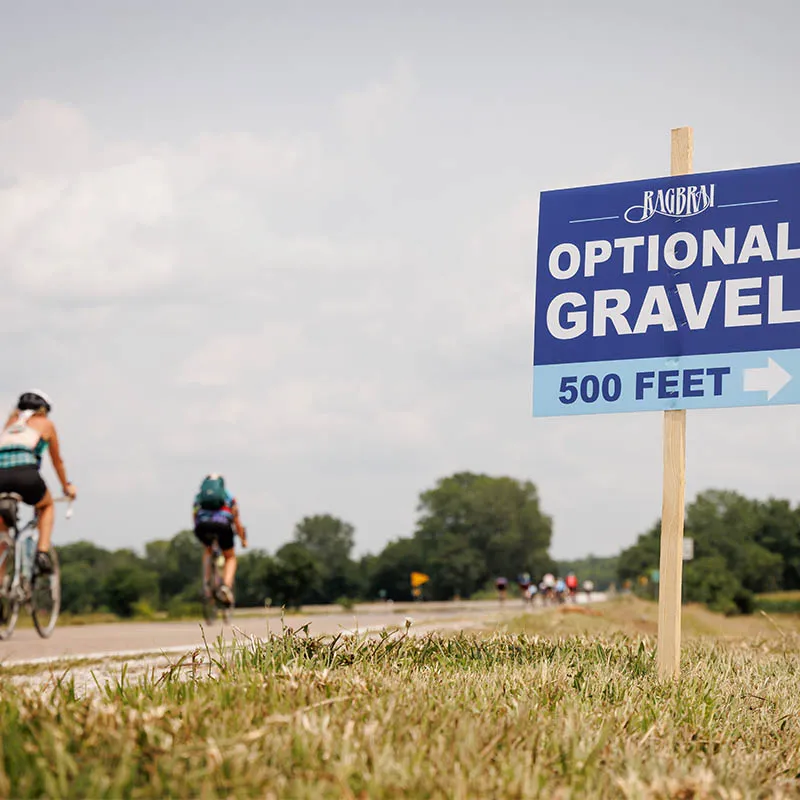
Gravel riding is booming lately as an alternative to riding roads and trails. There are several reasons for this, but primarily I believe it’s because there is a lot less vehicle traffic on rural gravel roads. It also gets you out into the countryside and riding new roads than you normally would. Gravel riding also presents some new and different challenges to your riding. And finally, it gives you an excuse to buy a new bike. Did you know they make bikes specifically for gravel?
Here’s some pointers for incorporating gravel riding in your training and for riding it on RAGBRAI.
What to expect on gravel roads
Gravel roads cover a whole range of conditions. After a rain, these can become hard packed and be just like riding on pavement. So smooth, you can ride your regular road bike on them. But they can also be freshly ‘graveled’ by the country road crew and can be covered with up to several inches of soft, deep gravel and sand.
Some gravel riding is actually on dirt roads, others on roads covered with crushed limestone. When I say ‘crushed’, it is crushed into pieces about an inch big, and these can be angular and sharp. Gravel roads across Iowa typically fall into this category. So not the fine crushed gravel you see on some bike trails. In many cases, a few days after new gravel is laid down, car traffic will create tire tracks and these are best to ride in to avoid riding through loose gravel.
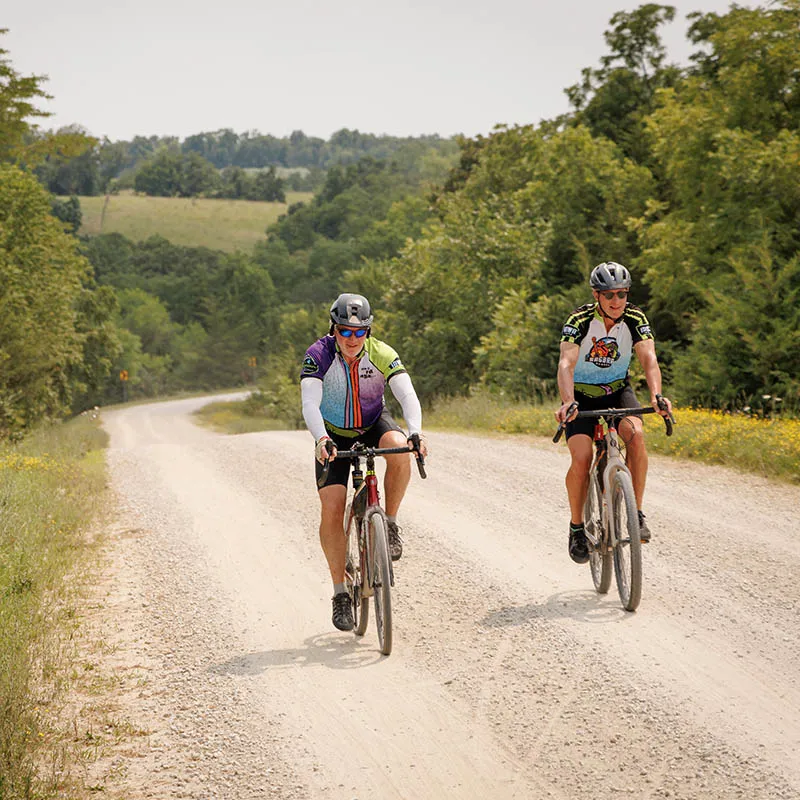
But if new gravel was just put down, or if the road grader has just come through, it can be tough going. Sometimes riding on the shoulder is the best option. If it has rained recently, gravel roads will be really soupy and sloppy to ride on. You will come out covered in a fine white layer of gravel paste at best and a muddy mess with tires that don’t turn, at worst.
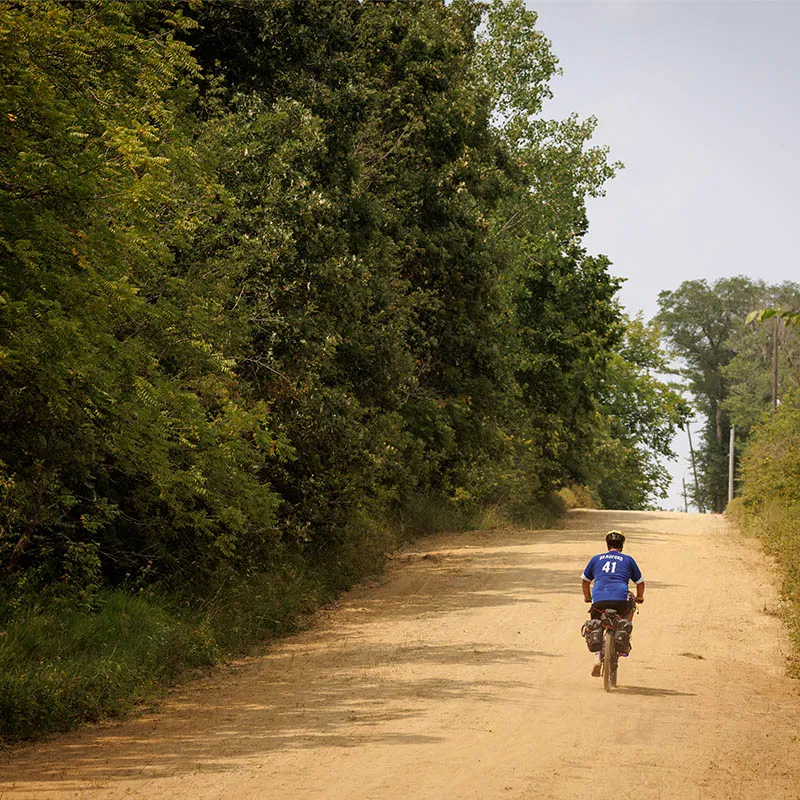
On the other hand, on really dry days you will come out covered in fine white power. And when cars occasionally do come by, you are engulfed in a cloud of dust. This is what makes it fun. If you don’t think this sounds like fun, stick to the pavement.
Do I need a special bike for gravel riding?
While they do make gravel bikes now that are specifically designed for gravel, one of the main differences is that gravel bikes are made to handle wider tires. Tire sizes have been increasing by gravel riders, all the way up to 50 cm. And they are heavier and have treads on them, unlike tires on your road bike. Wide gravel tires help to make the ride more comfortable, are more durable against cuts and flats, and help ride through heavy gravel better.
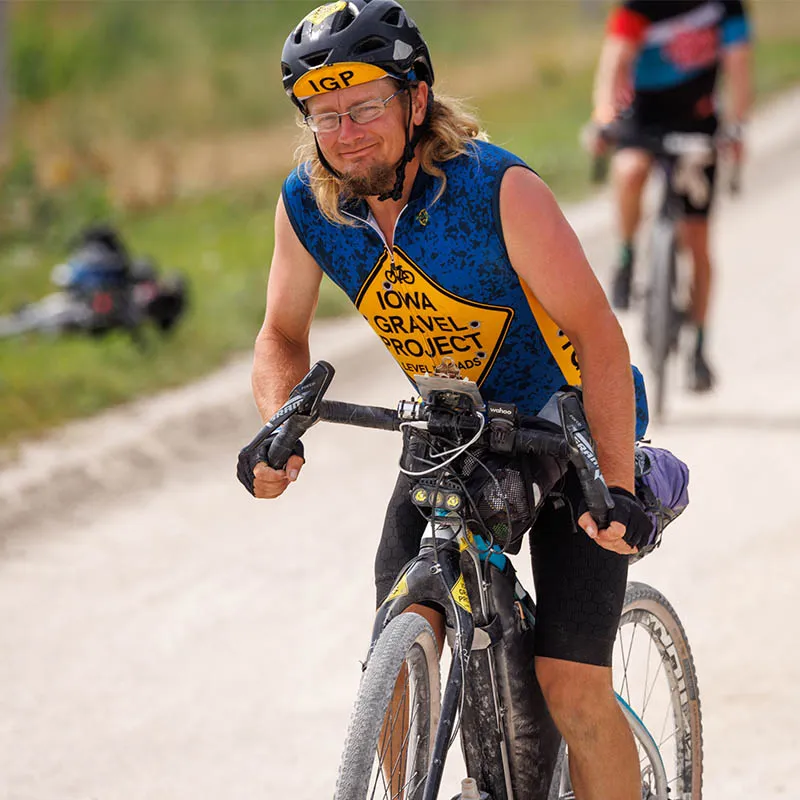
If you want to try gravel but don’t necessarily want to buy a new bike for some reason, you can try it on your road bike but you will want wider, heavier tires. I’d recommend at least 28cm but preferably wider, if your bike can handle them. Road bikes don’t have a lot of extra tire clearance so you may be limited by your frame dimensions. Also keep in mind that the rims on your bike are only designed for specific tire widths. Your bike shop can help figure out what will work. Here’s a great website that explains the pros and cons of various tire widths for gravel.
Further Reading: RAGBRAI Training – Getting Equipped for RAGBRAI
Tips for riding on gravel roads
Finally, riding on gravel requires some new skills compared to your road riding. For one thing, you are constantly looking ahead to try to pick out the best line through the gravel, following tire tracks when present, and shifting around on the road to avoid the heavy gravel patches.
You need to be especially vigilant on downhills on gravel. You can’t turn quickly and if you get into loose gravel traveling fast, you may not be able to make a turn. It’s also easier to lose control of your steering in deep gravel, even when going straight. Look a ways ahead to make sure you have a smooth path to ride and if you see heavy gravel sections ahead, slow down as you approach them. Gravel riding is slower than riding on the road, but who’s in a rush. You choose gravel to get away from the crowds and enjoy the peace and quiet of the countryside.
You are more apt to get a flat tire on gravel, even with the heavier tires, just because you are riding through, well, gravel! So be sure to bring along a couple of spare tubes and know how to change them. There will be less people out there to help you out. It may not hurt to even bring along a spare tire as you can get sidewall cuts on sharp gravel.
If you plan to do a lot of gravel riding on RAGBRAI it probably makes sense to do it on a gravel bike. But don’t go out and buy one just for RAGBRAI unless you plan to keep riding gravel after. Renting one for RAGBRAI may be an option. Now if you do have a gravel bike and want to use it on RAGBRAI, what do you do about riding on pavement? No problem, gravel bikes work fine on pavement. They have a bit more rolling resistance but the tires aren’t that much bigger (not like a mountain bike tire), so you could do the whole of RAGBRAI on your gravel bike and not need to bring a road bike. Plus, gravel bikes tend to be a little more comfortable to ride, on the road as well as pavement.
As far as training for gravel riding is concerned, it’s important to do some gravel riding before you get to RAGBRAI so you have some sense of how the bike handles in gravel, especially loose gravel. You don’t want to be learning how on RAGBRAI, where you’ve got others around you. And maybe you will decide it’s not your thing, which is a good thing to find out before you get to RAGBRAI.
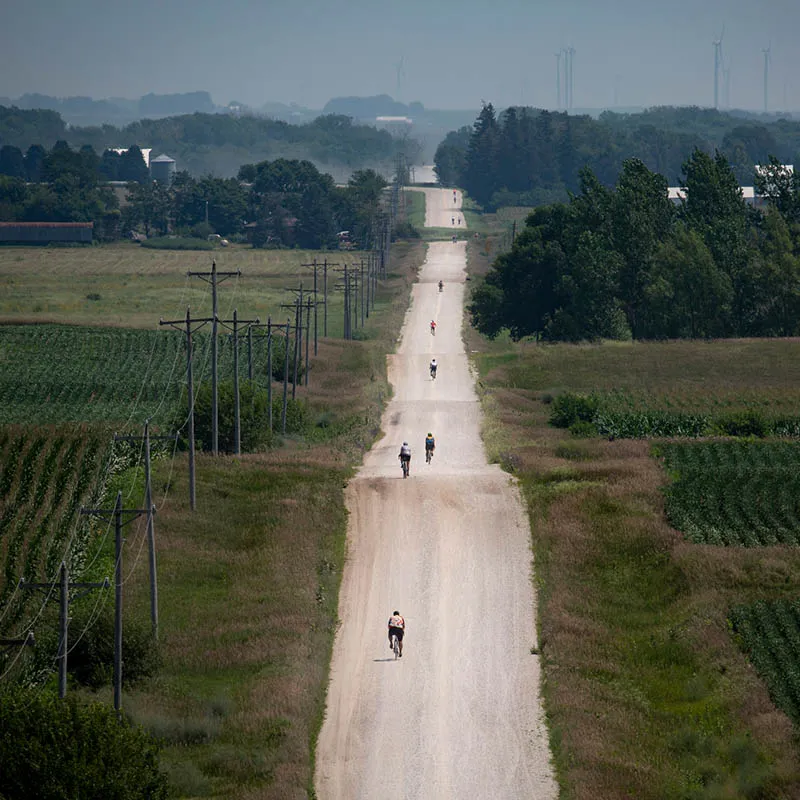
So get out and grovel in the gravel.
Find All 2025 Training Blogs

Find all of Coach Ertl’s Training Blogs, as well as the 2025 Training Plan in our Training section on RAGBRAI.com.
Coach David Ertl
David Ertl is a USA Cycling Advanced Certified Coach. He coaches individual cyclists through the Peaks Coaching Group www.peakscoachinggroup.com/davidertl . He also provides cycling training plans and ebooks at his website: www.CyclesportCoaching.com. He can be contacted at [email protected].
