


How to Train and Ride RAGBRAI Safely
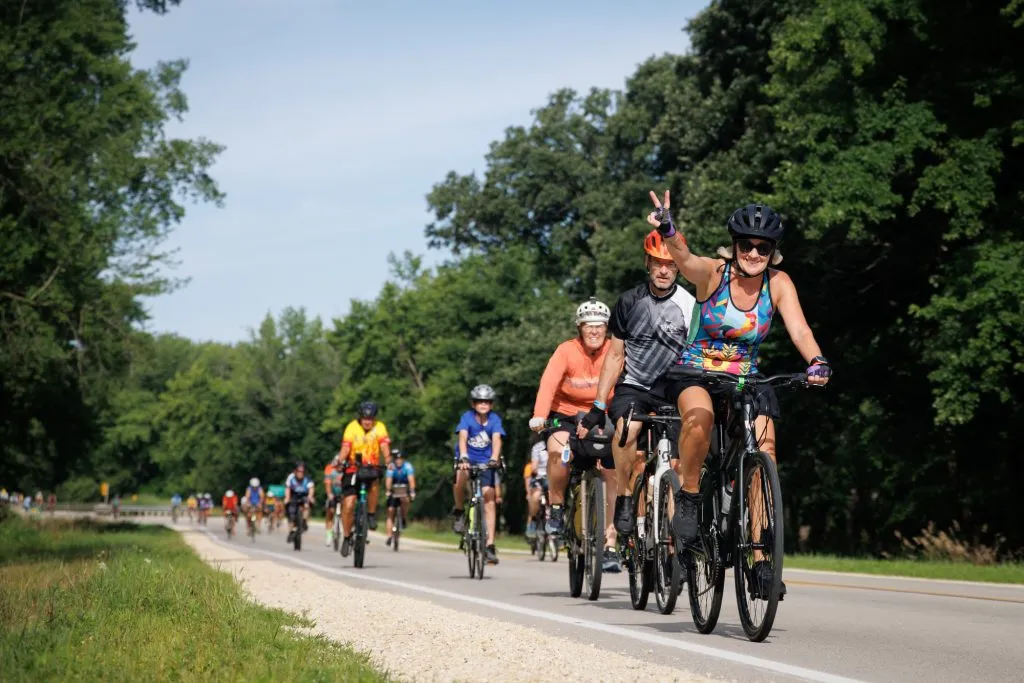
This week we are taking a deviation from the regular training tips to talk about something that’s even more important – tips on how to train and ride RAGBRAI safely. All the training in the world won’t make a difference if you have an accident and can’t make it to RAGBRAI, and you can’t complete it if you have an accident while on RAGBRAI.
For more on Safety, check out the Safety Information page on RAGBRAI.com.
Rules of the road
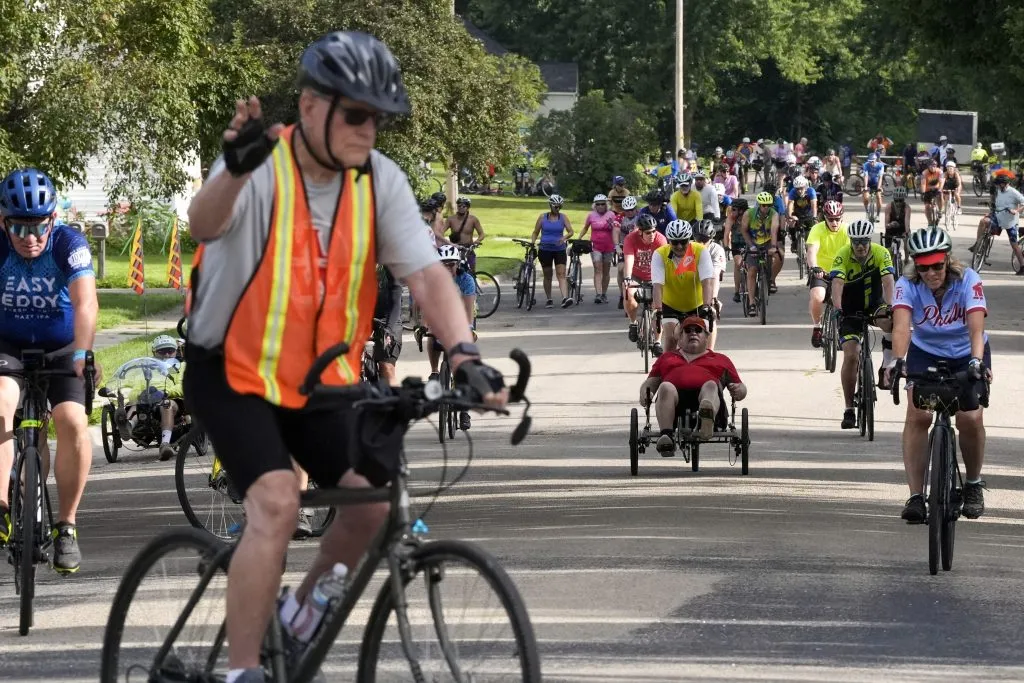
Bicyclists have rights while on roads, but we also have responsibilities. We are afforded the same rights to the road as vehicles, but we also must obey the same laws as well, especially stop signs (but also speed limits if you are really fast).
One of my real peeves is seeing cyclists fly through stop signs, especially when cars are present. This gives all of us cyclists a very bad reputation. So when approaching stop signs, slow and stop (slow rolling stops are okay), and it is very helpful to make eye contact with drivers of cars who are also at an intersection. Often they will wave you on but don’t assume so. If in doubt, allow them to go and then proceed. Politeness will pay dividends down the road, literally.
Another peeve I have is seeing cyclists riding way out in the lane, or close to the center line. This is unnecessary and dangerous, and is another way we tick off drivers. Stay as close a practicable to the right side of the road. However, it’s okay to ride on the white line or slightly to the left.
If it is a busy road make sure you ride single file if riding with others. In Iowa, cyclists are allowed to ride two abreast on roadways, except when traveling uphill or if riding two abreast would impede the normal and reasonable movement of traffic. However, use common sense here and if there is a lot of traffic avoid causing a traffic jam, another good way to tick off drivers. Things are different while on RAGBRAI, see below.
While cyclists have the same rights as vehicles, often drivers don’t know (or care) about this. Therefore when riding, I always assume the driver doesn’t see me and ride defensively. Even if they are in the wrong, they are bigger than you.
Safe riding practices in groups
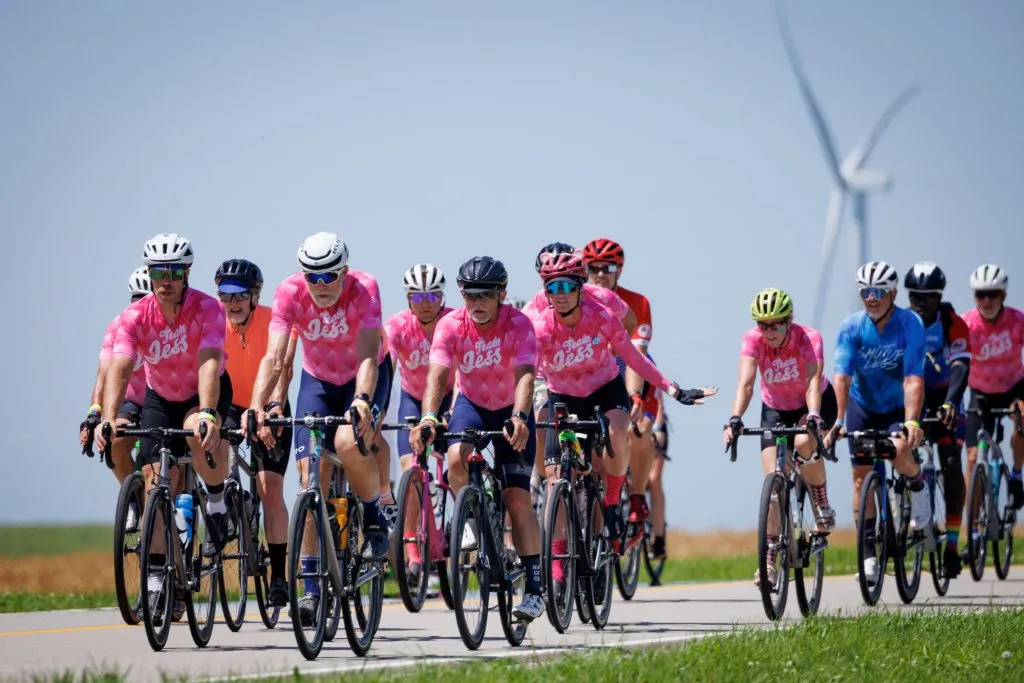
When you are out riding with others, there are several practices we use to help avoid mishaps and communicate with each other. When riding with others we often will draft to take advantage of reduced wind resistance when following other riders. This is a safe practice when you are skilled at it and are riding with other skilled riders.
It’s not so safe when you are not comfortable following closely behind someone else. If that is the case, back off and give yourself space. If you are riding with people you don’t know or aren’t familiar with, be careful and avoid drafting until you know how well they ride.
When riding in groups it is especially important that you are careful with braking. If you hit your brakes suddenly, you may end up with a fellow cyclist riding into your rear end. So when in a group and you need to slow down, first try to ease up on the pedals, then coast, then lightly apply the brakes. We call if ‘feathering’ the brakes, so just touch them lightly to slow yourself down a bit and avoid a sudden slowdown.
Another important practice while riding in groups is to ride steadily, both directionally and speed-wise. Directionally, it means hold your line – ride in a straight line. Try to avoid weaving and swerving, which makes it dangerous for your fellow riders. If you find there is a need to swerve to avoid something in the road, point and call it out. Also try to maintain as constant of a speed as possible to make your riding more predictable.
It’s also important to communicate to other riders at times. If you in the front of the group you are responsible for letting them know of potential dangers, such as a car pulling out in front or slowing in front of you, or debris in the road. You can use various hand signals to indicate slowing (holding the palm of your hand out behind you) or calling out the danger, or both.
If there is something in the road, or a big hole, call it out and point to it before you get there, or your followers will be bound to run right over it. Another peeve – people who call out every little stick, bump, piece of gravel that’s on the road – use your judgement and limit it to things that could cause a crash or flat.
What to expect on RAGBRAI
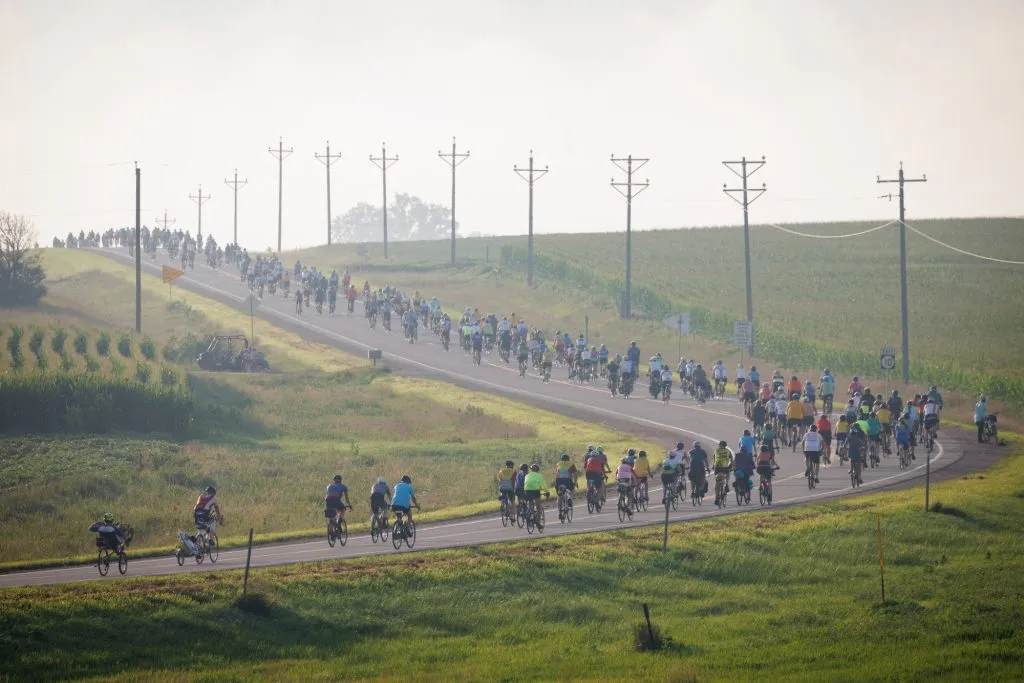
Now when you get to RAGBRAI there are a few other things to be aware of. First off, the entire lane will be filled with cyclists. You may be three or four abreast much of the time.
First rule, if you are slower or uncomfortable around others, please stay to the right and let others pass you. Yet another peeve – people who ride slowly way out to the left of the right lane. It’s not safe passing people on the right, so try not to force them to do so. As on the interstate, we should let faster riders go past on our left.
Be especially cautious when entering or leaving the road. If you need to stop, make sure you are on the right side of the road, point to the ride and call out ‘stopping,’ slow gradually and leave the pavement. DO NOT STOP ON THE PAVEMENT! That is a great way to cause a pileup. When reentering the road, look behind you, wait for a gap in riders, then ease back onto the road. Some people like to call out ‘rider on’ or some such thing.
One of the most dangerous things about RAGBRAI is there are a lot of riders sharing the road, and they are going at very different speeds. As you know from driving on interstates, when you come up to a vehicle going 40 mph and you are doing 70, it creates a dangerous situation. The same happens on bikes. If you are riding at 16 mph and come upon someone doing 8, you will need to either brake or swerve (both undesirable) so the best thing is to be looking ahead and as you are approaching slower riders, either slow down yourself or gradually move over to pass well ahead of time. This is exacerbated on downhills where everyone is traveling faster and reaction time is increased. Some riders are quite timid on downhills and may be traveling quite slowly even on downhills so be on alert.
Coach David Ertl

Find all of Coach Ertl’s Training Blogs, as well as the 2026 Training Plan in our Training section on RAGBRAI.com.
David Ertl is a USA Cycling Advanced Certified Coach. He coaches individual cyclists through the Peaks Coaching Group www.peakscoachinggroup.com/davidertl. Ertlalso provides cycling training plans and ebooks at his website: www.CyclesportCoaching.com. You can contact Coach Ertl at: [email protected].
